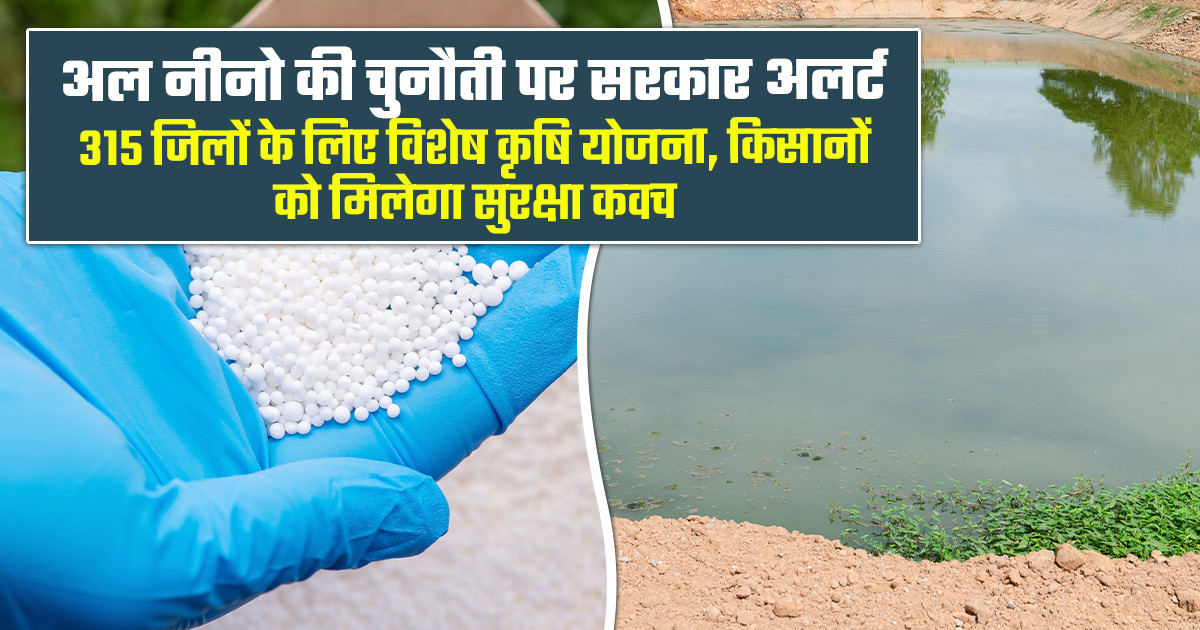
With concerns over El Niño and the possibility of below-normal rainfall this year, the Central Government has stepped up its preparations for the Kharif season. A comprehensive strategy is being implemented jointly by the Centre and state governments to minimize the impact of weak monsoon conditions and protect farmers' livelihoods. Officials have emphasized that the focus is on proactive planning rather than waiting for adverse weather conditions to worsen, ensuring that farmers receive timely support and guidance.
Following scientific assessments of rainfall patterns and irrigation coverage, around 315 districts have been identified as potentially vulnerable to weak monsoon conditions. Among them, 111 districts have been categorized as highly sensitive due to limited irrigation facilities. Several districts across Madhya Pradesh, Maharashtra, Gujarat, Uttar Pradesh, Rajasthan, Karnataka, Bihar, Jharkhand, Telangana, Andhra Pradesh, and Odisha fall within the vulnerable category. Local administrations in these regions have been instructed to strengthen preparedness measures.
Agricultural scientists and research institutions have prepared district-specific contingency plans to deal with possible rainfall deficiencies. These plans consider local climate conditions, water availability, cropping patterns, and regional risks. The strategies include alternative crop options, efficient water management practices, and income diversification measures aimed at reducing the impact of adverse weather conditions.
Water conservation has emerged as a key component of the government's preparedness strategy. Authorities have been directed to strengthen ponds, farm reservoirs, check dams, canals, and other water-harvesting structures. Rural development programmes and employment schemes are also being aligned with water conservation activities to improve storage capacity and enhance drought resilience in vulnerable regions.
Shift towards Low-Water and Short-Duration Crops:
To reduce weather-related risks, farmers in rainfed regions are being encouraged to adopt short-duration crop varieties that require less water. Greater emphasis is being placed on pulses, oilseeds, and millets, which perform better under limited moisture conditions. Intercropping and mixed farming practices are also being promoted to diversify income sources and reduce dependence on a single crop.
Adequate Availability of Seeds and Fertilizers:
The government has ensured sufficient availability of seeds and fertilizers for the Kharif season. Additional seed reserves have been earmarked for vulnerable districts to support resowing if required. Supplies of major fertilizers, including urea, DAP, NPK, and other essential inputs, are being continuously monitored to ensure timely availability for farmers.
Digital Advisory Services to Support Farmers:
Agricultural advisory services are being strengthened through Krishi Vigyan Kendras and weather-based advisory systems. Farmers will receive regular updates through SMS, WhatsApp messages, call centers, radio, television, and social media platforms. The objective is to provide timely scientific guidance on sowing decisions, crop management, and weather-related risks.
Livestock and Fodder Management Plans in Place:
Authorities are also preparing for potential fodder shortages that may arise due to poor rainfall. Advance arrangements are being made to ensure the movement and supply of fodder to affected areas if necessary. Monitoring systems are also being strengthened to prevent hoarding and ensure adequate fodder availability for livestock owners.
PMFBY, KCC and PM-KISAN to Serve as Key Safety Nets:
Financial security for farmers remains a major focus of the government's preparedness strategy. Efforts are being made to expand coverage under the crop insurance programme, increase access to Kisan Credit Cards, and encourage effective utilization of PM-KISAN benefits. Experts believe that crop insurance, affordable credit, and direct financial assistance can help farmers manage weather-related risks more effectively.
No Immediate Threat to Food Security:
According to government assessments, the country's foodgrain reserves remain adequate. Sufficient buffer stocks of rice and wheat are available, reducing immediate concerns over food security. Production targets for the Kharif 2026 season have been established with the aim of minimizing the impact of weak monsoon conditions on overall agricultural output.
Early Action Aims to Protect Farmers and Agriculture:
Experts believe that integrated measures such as water conservation, alternative crop planning, input management, crop insurance, and digital advisory services can significantly reduce the risks associated with El Niño conditions. The government's advance preparedness is expected to strengthen farmers' resilience, safeguard agricultural production, and ensure food security even under challenging weather conditions.
FAQs:
Q1. Why are 315 districts identified as vulnerable?
They are prone to low rainfall due to weak monsoon impact and limited irrigation coverage.
Q2. What crops are recommended in weak monsoon conditions?
Millets, pulses, oilseeds, and short-duration crops are recommended.
Q3. How is the government supporting farmers financially?
Through PMFBY, PM-KISAN, and KCC credit facilities.
Q4. What is the role of water conservation?
It helps store rainwater and reduce drought impact in agriculture.
Q5. How does Khetivyapar help farmers?
Khetivyapar provides updates on mandi prices, crop advice, and agricultural news for better decision-making.