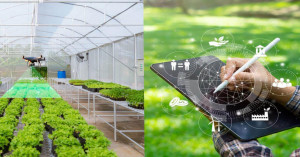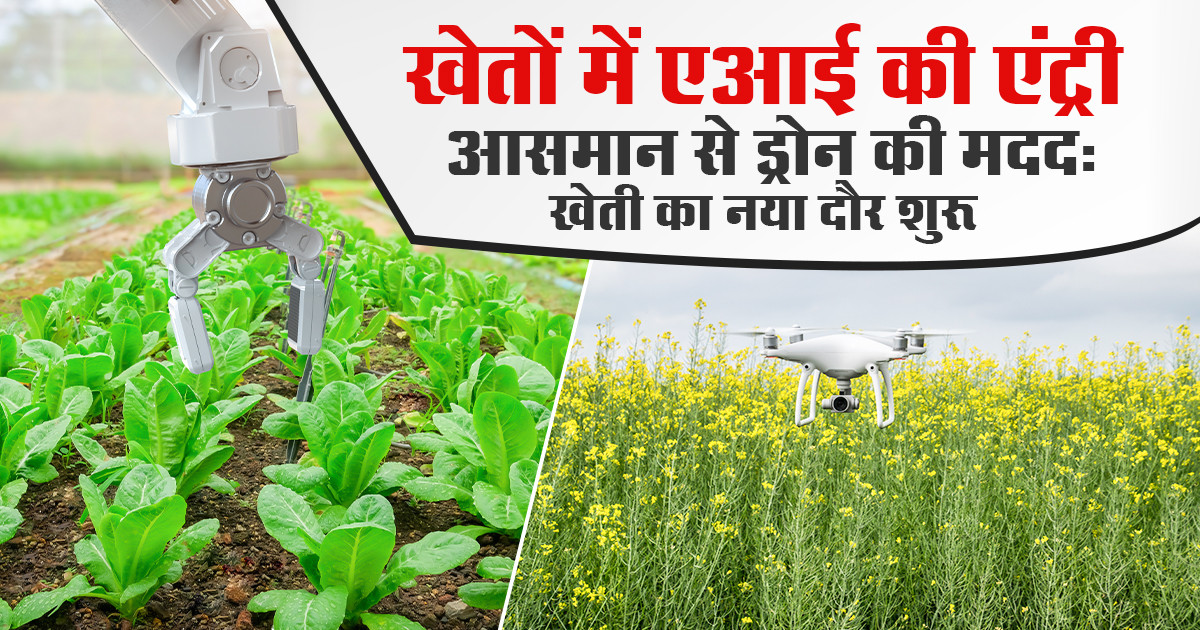
The Central Government is rapidly promoting Artificial Intelligence (AI) and drone technology to enhance agricultural productivity and strengthen farmers’ livelihoods. Through multiple schemes and initiatives, the Department of Agriculture and Farmers’ Welfare is integrating advanced technologies across states and Union Territories. These efforts include precision farming, drone-based operations, climate-smart agriculture, and AI-driven solutions.
The adoption of these modern technologies is helping improve crop productivity, promote sustainable farming practices, increase farmers’ income, and address long-standing challenges faced by the agricultural sector.
‘Kisan e-Mitra’ is a voice-based, AI-powered chatbot developed to assist farmers with queries related to the PM-Kisan Samman Nidhi Scheme, the Pradhan Mantri Fasal Bima Yojana, and the Kisan Credit Card. Available in 11 regional languages, the platform answers over 8,000 farmer queries daily. So far, it has successfully resolved more than 9.3 million questions, providing timely digital support to farmers across the country.
To tackle rising pest attacks caused by climate change, the National Pest Surveillance System has been developed using AI and machine learning technologies. The system helps detect pest infestations at an early stage, enabling timely intervention to protect crops.
Currently, more than 10,000 agricultural workers are using this tool. Farmers can upload images of pests and receive quick guidance to reduce crop damage. The system now covers 66 crops and over 432 pest species, significantly strengthening pest management efforts.
Collaboration with India Meteorological Department and the Development Innovation Lab, an AI-based pilot project was launched to provide early local monsoon forecasts for Kharif 2025 across parts of 13 states.
Through the mKisan portal, monsoon arrival information was shared via SMS in five regional languages with over 38.8 million farmers.
Feedback surveys conducted through farmer call centers in Madhya Pradesh and Bihar revealed that 31–52 percent of farmers adjusted their land preparation and sowing schedules based on these forecasts, including changes in crop selection and input use.
Under the Sub-Mission on Agricultural Mechanisation (SMAM), small, marginal, and women farmers are being provided up to 50 percent subsidy (maximum ₹5 lakh) for purchasing agricultural drones. Financial assistance is also being extended for setting up Custom Hiring Centres (CHCs), enabling farmers to rent drones and other advanced farm equipment.
Between 2023–24 and 2025–26 (up to 30 November 2025), approval has been granted for the distribution of 2,122 drones to individual farmers and CHCs.
To promote sustainable livelihoods among women Self-Help Groups (SHGs), the Central Government approved the ‘Namo Drone Didi’ scheme. During 2023–24, leading fertiliser companies distributed 1,094 drones to SHGs, including 500 drones under the Namo Drone Didi initiative.
A study conducted by the Agricultural Development and Rural Transformation Centre (ADRTC), Bengaluru, found that the adoption of drone technology significantly improved the efficiency, productivity, and income opportunities of women SHGs, while expanding their role in modern agricultural practices.
ICAR Plays a Key Role in Drone Adoption:
Institutes under the Indian Council of Agricultural Research are playing a crucial role in promoting drone technology across the country. From 2023–24 to 2025–26 (up to 30 November 2025), drone demonstrations were conducted on 41,010 hectares of farmers’ fields through ICAR institutes, State Agricultural Universities, and Krishi Vigyan Kendras, directly benefiting over 452,000 farmers.
A Transformational Shift in Indian Agriculture:
Overall, the widespread adoption of AI and drone technology is driving innovation in Indian agriculture, improving crop management practices, and creating new income opportunities for farmers and rural women, marking a significant step toward a smarter and more resilient agricultural future.
Read More- How Artificial Intelligence is Boosting Productivity in Agriculture