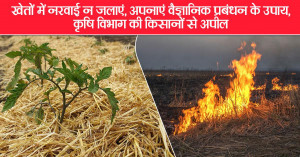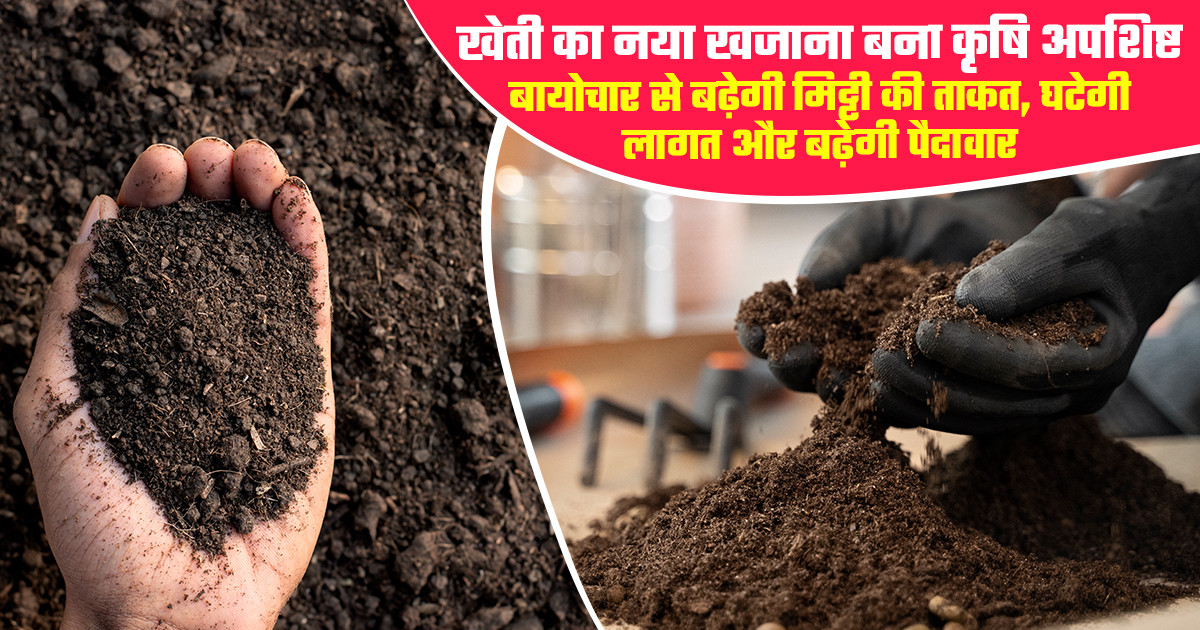
Across many parts of the world, farmers often burn crop residue and agricultural waste, considering it useless. While this practice harms the environment, it also destroys a valuable opportunity for additional farm income. Now, the same agricultural waste is gaining attention as “Black Gold” in the form of biochar a powerful soil enhancer that could transform modern farming. Experts say biochar is a carbon-rich material produced by heating agricultural waste in a controlled environment. It is increasingly being recognized for its ability to improve soil quality, conserve water and reduce farming costs.
Biochar is being viewed as an important tool for sustainable and climate-smart agriculture. It can be produced from crop residue, dry leaves, wood waste and other organic materials. One of its biggest advantages is that it can be prepared locally using simple and low-cost techniques, making it suitable even for rural farming communities. Agricultural scientists believe biochar improves soil structure and helps store carbon in the soil for a long period. This makes it an important component of future-ready and environmentally sustainable farming systems.
Experts believe biochar has the potential to create new economic opportunities in emerging agricultural markets, including Africa and Asia. It could support sustainable farming, organic agriculture, carbon credit projects and waste-to-value business models. In countries like India, where crop residue burning remains a major challenge, biochar technology could help reduce pollution while creating additional income opportunities and rural employment.
A New Direction for Sustainable Farming:
Agriculture experts say biochar could play a major role in making farming more sustainable, low-cost and environmentally friendly in the coming years. The agricultural waste that farmers once considered useless may soon become a valuable resource for improving soil health, increasing productivity and strengthening farm incomes.
FAQs:
1. What is biochar made from?
Biochar is made from agricultural waste like crop residue, dry leaves, wood waste and other organic materials.
2. How does biochar improve soil fertility?
Biochar helps retain nutrients and moisture in the soil, improving soil fertility and crop health.
3. Can biochar reduce fertilizer costs?
Yes, biochar improves nutrient availability, which can reduce dependence on chemical fertilizers.
4. Is biochar useful for climate-smart agriculture?
Yes, biochar stores carbon in the soil and helps reduce carbon emissions, making it useful for climate-smart agriculture.
5. Can farmers earn income from biochar?
Farmers can convert agricultural waste into biochar and create additional income opportunities through sustainable farming and carbon credit projects.