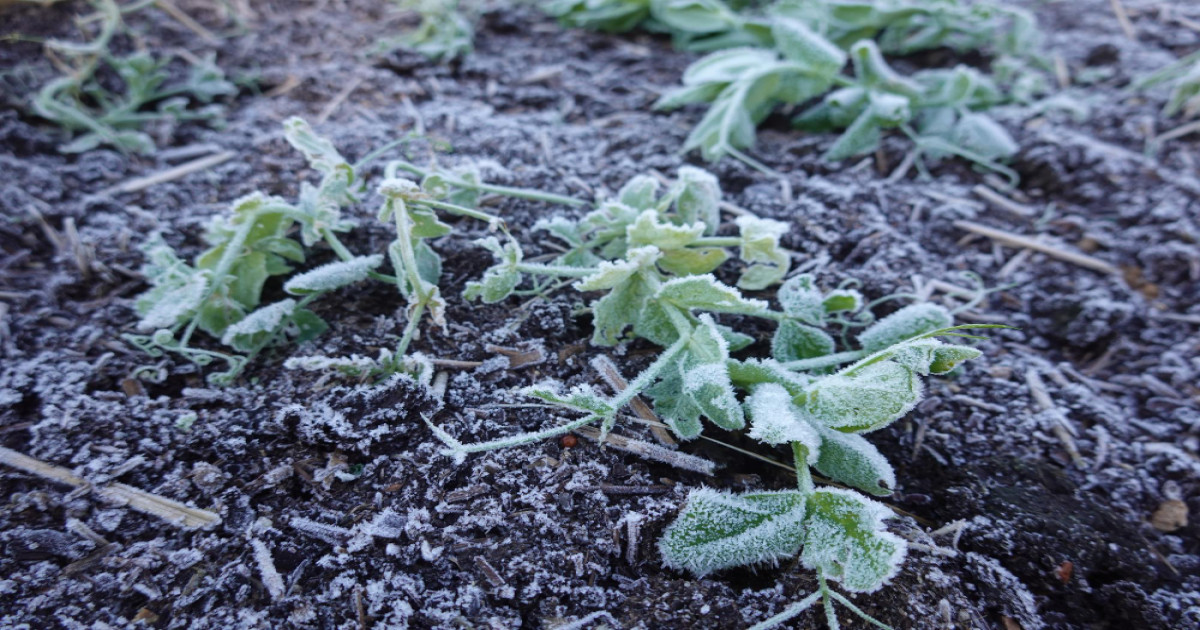
The Department of Farmer Welfare and Agricultural Development has advised farmers to remain alert and take timely measures to protect Rabi crops from the increasing risk of cold waves and frost. According to the department, temperatures are continuously falling, which has significantly raised the likelihood of frost damage to standing crops. The risk becomes even higher when northerly winds blow during the evening hours. In such conditions, farmers can minimize crop losses by adopting the following preventive measures:
One of the most effective ways to protect crops from frost is to generate smoke at 6–7 locations along the field bunds. Smoke helps prevent the field temperature from dropping to the freezing point, thereby reducing frost damage. Dry leaves, straw, crop residues, or other organic materials can be used for this purpose.
Frost causes maximum damage to nursery plants. Therefore, it is recommended to cover nursery seedlings with plastic sheets during the night. This practice can raise the temperature inside by about 2–3 degrees Celsius, keeping plants safe from frost. If plastic sheets are not available, straw can also be used as an alternative. While covering plants, ensure that the south-eastern side remains open so that plants receive adequate sunlight during the morning and afternoon.
If frost conditions are anticipated, farmers are advised to spray a 0.1 percent solution of sulphuric acid on crops. For this, mix 1 litre of sulphuric acid in 1,000 litres of water and spray it over one hectare using a plastic sprayer. The effect of this spray lasts for about two weeks. If cold wave and frost conditions persist beyond this period, the spray should be repeated at intervals of 15 days.
Spraying Sulphur 90% WDG powder at the rate of 3 kg per acre, followed by light irrigation, is beneficial in frost-prone conditions. Alternatively, Sulphur 80% WDG powder can be mixed at 40 grams per pump (15 litres of water) and sprayed on crops.
Q1: How does smoke protect Rabi crops from frost?
A1: Smoke helps retain heat by preventing the temperature from dropping to freezing, reducing frost formation on crops.
Q2: Why is it important to cover nursery plants during frost?
A2: Nursery plants are more vulnerable to frost damage. Covering them increases temperature and prevents freezing injuries.
Q3: How often should sulphuric acid spray be applied in frost conditions?
A3: The spray effect lasts about two weeks; if frost continues, farmers should repeat spraying every 15 days.
Q4: Can straw be used as a substitute for plastic sheets in frost protection?
A4: Yes, straw can be used to cover plants when plastic sheets are unavailable, providing insulation against frost.
Q5: What is the recommended dose of sulphur powder spray for frost protection?
A5: Use Sulphur 90% WDG powder at 3 kg per acre or Sulphur 80% WDG powder at 40 grams per 15 litres water per spray.