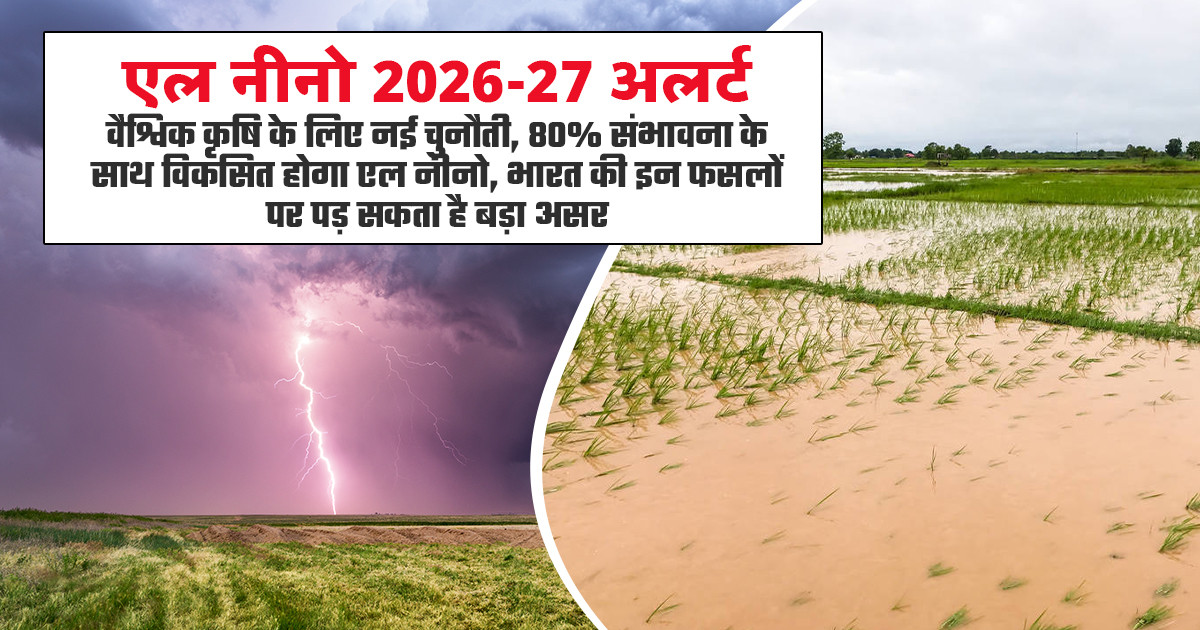
World is once again facing the possibility of a significant El Niño event, with leading international agencies warning of its potential impact on agriculture, food security and global economies. The Food and Agriculture Organization (FAO), the World Food Programme (WFP) and the World Meteorological Organization (WMO) have cautioned that an El Niño event expected to develop during 2026–27 could disrupt weather patterns across several regions, affecting crop production, water availability and food prices.
According to the latest assessment by the World Meteorological Organization (WMO), there is an 80% probability that El Niño will develop between June and August 2026, while the likelihood of it persisting until November 2026 exceeds 90%. Most climate models indicate that the event is likely to be moderate to strong, increasing the risk of widespread climatic disruptions.
El Niño is a naturally occurring ocean-atmosphere climate phenomenon characterized by unusually warm sea surface temperatures in the central and eastern equatorial Pacific Ocean. These warmer waters alter global atmospheric circulation, influencing rainfall, temperature and weather patterns across different continents. Typically occurring every two to seven years, El Niño episodes last for 9 to 12 months, although stronger events can persist longer. The phenomenon generally begins developing between March and June, with its strongest impacts observed from November to February.
India remains heavily dependent on the southwest monsoon, with more than half of the country's cultivated land relying primarily on rainfall for irrigation. A weaker or erratic monsoon triggered by El Niño could adversely affect kharif crop production.
However, meteorologists emphasize that El Niño does not automatically translate into a weak Indian monsoon. The final monsoon outcome also depends on several other climatic factors, including the Indian Ocean Dipole (IOD), Madden-Julian Oscillation (MJO), monsoon circulation patterns and regional ocean-atmosphere interactions. Therefore, rainfall forecasts should continue to be guided by updated advisories from the India Meteorological Department (IMD).
If the onset of the monsoon is delayed or rainfall remains below normal during July and August, several major kharif crops may experience reduced productivity. Paddy- Rice transplantation may be delayed due to inadequate rainfall, particularly in eastern India, Chhattisgarh, Jharkhand, Bihar, West Bengal, Odisha and eastern Uttar Pradesh, where paddy cultivation is highly dependent on monsoon rains.
Maize- Moisture stress during flowering can significantly reduce grain formation and final yields. Soybean- Major soybean-growing states such as Madhya Pradesh, Maharashtra and Rajasthan could witness poor germination, flower drop and lower pod development if rainfall remains deficient. Cotton- Cotton requires adequate soil moisture during its early vegetative stage. Prolonged dry conditions may restrict plant growth and reduce overall productivity. Pulses- Kharif pulses including pigeon pea (tur), black gram (urd) and green gram (moong) are relatively drought tolerant but prolonged dry spells combined with high temperatures can still lead to substantial yield losses.
Horticulture Crops May Also Face Stress:
The impact of El Niño is not expected to be limited to cereals and pulses. Several horticultural crops may also suffer due to higher temperatures and moisture stress. Potentially affected crops include: Mango, Banana, Grapes, Orange, Tomato, Onion, Potato, Chilli. Higher temperatures and reduced soil moisture could increase fruit drop, reduce fruit size, lower quality and adversely affect overall marketable yield.
Livestock and Dairy Sector Could Come Under Pressure:
Below-normal rainfall may also reduce the availability of green fodder, increasing feed costs for livestock farmers. Higher temperatures can lead to heat stress in cattle, resulting in lower milk production, reduced reproductive performance and higher livestock management expenses.
Lower Agricultural Output Could Push Food Inflation Higher:
A significant decline in agricultural production could tighten domestic food supplies, leading to higher prices of essential commodities. Economists believe such a scenario may:
Increase food inflation.
Climate Change Could Intensify El Niño Impacts:
According to the World Meteorological Organization, there is currently no conclusive scientific evidence that climate change is increasing the frequency or occurrence of El Niño events. However, rising global temperatures are likely to amplify their impacts, making associated heatwaves, droughts, intense rainfall events and floods more severe than in previous decades.
How Farmers Can Prepare:
Agricultural experts recommend that farmers adopt climate-resilient farming practices well before the monsoon season.
Key recommendations include:
FAQs:
1. What is El Niño?
El Niño is a climate phenomenon caused by unusually warm sea surface temperatures in the central and eastern Pacific Ocean, affecting global weather patterns.
2. Will El Niño weaken India's monsoon?
Not necessarily. While El Niño can reduce monsoon rainfall, the final outcome also depends on factors like the IOD, MJO, and regional weather conditions.
3. Which crops are most vulnerable during El Niño?
Major kharif crops including paddy, maize, soybean, cotton, pigeon pea (tur), urd, and moong are among the most vulnerable.
4. How can farmers prepare for El Niño?
Farmers should follow weather advisories, adopt drought-tolerant varieties, conserve soil moisture, use micro-irrigation, harvest rainwater, and insure crops under PMFBY.
5. Can El Niño increase food prices?
Yes. If El Niño reduces agricultural production, food supplies may tighten, leading to higher food inflation and increased prices of essential commodities.