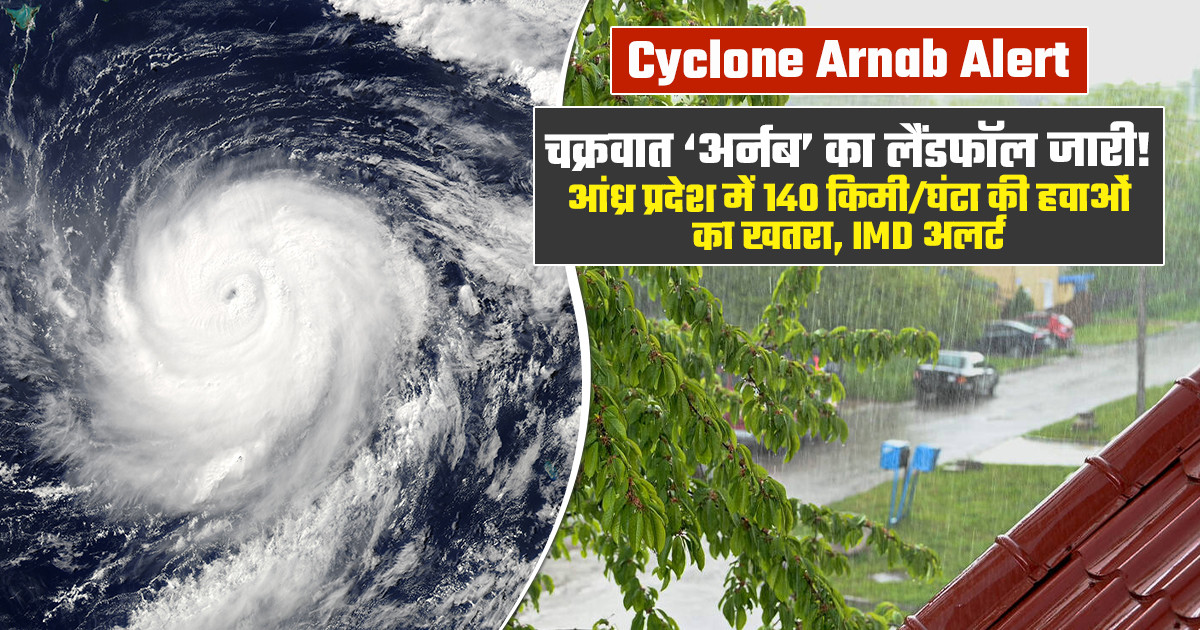
Cyclone Arnab Update: Extremely Severe Cyclonic Storm Arnab is approaching the Andhra Pradesh coast, bringing the threat of destructive winds, heavy rainfall and coastal flooding. According to the India Meteorological Department (IMD), the landfall process is underway, with the storm expected to cross the coast between Bapatla and Visakhapatnam, south of Yanam, within the next two hours. Wind speeds are forecast to reach 115–125 kmph, with gusts of up to 140 kmph. Low-lying coastal areas, particularly around Kakinada, Yanam and the Godavari river mouth, face a heightened risk of seawater inundation.
Cyclone Arnab has intensified into an extremely severe cyclonic storm over the west-central Bay of Bengal. In its bulletin issued on October 28, 2026, the IMD reported that the system had remained nearly stationary for approximately three hours. At 5:30 a.m. IST, the storm's centre was located near 16.4°N latitude and 82.0°E longitude, close to the Andhra Pradesh coast. The storm's outer cloud bands had begun interacting with land, indicating that the landfall process was underway. The IMD indicated that the cyclone was likely to move northwestwards and continue crossing the coast over the following two hours. Residents in vulnerable coastal areas should remain alert and follow instructions issued by local authorities.
According to the IMD forecast, Cyclone Arnab is likely to cross the Andhra Pradesh and Yanam coast between Bapatla and Visakhapatnam, south of Yanam. During landfall, maximum sustained wind speeds are expected to reach 115–125 kmph, with gusts potentially reaching 140 kmph. Such powerful winds can damage structures, uproot trees, disrupt electricity supplies and affect road transport. People living in coastal and exposed areas should avoid unnecessary travel, stay away from the shoreline and seek shelter in safe buildings. Residents should follow official evacuation instructions wherever issued.
Coastal flooding is a major concern as the cyclone approaches land. The IMD has forecast a storm surge of approximately 1.5–2.5 metres above the astronomical tide level in low-lying coastal areas of Andhra Pradesh. The maximum surge is expected around Kakinada and Yanam, while the area near the Godavari river mouth could experience a surge of around 2–3.5 metres. The rise in sea level could push seawater into low-lying settlements and areas near the river mouth, increasing the risk of flooding and damage to property. People in vulnerable locations should move to safer places if instructed by local authorities and avoid flooded roads, riverbanks and coastal stretches.
The sea is expected to remain phenomenal until the cyclone completes its landfall. Conditions are forecast to gradually improve afterwards, becoming very high to high by the evening of October 28 and very rough to rough by the morning of October 29. Fishermen should avoid venturing into the sea and strictly follow warnings issued by the IMD and local authorities. Coastal residents should remain cautious about high waves, sudden changes in water levels and possible seawater inundation. The cyclone is expected to weaken gradually after crossing the coast. However, hazardous weather and residual impacts may continue even as the system loses intensity.
Cyclone Arnab: Essential Safety Advice for Farmers:
Strong winds and rainfall associated with Cyclone Arnab could threaten standing crops, harvested produce, farm equipment and livestock in affected coastal areas. Farmers should take precautionary steps to minimize potential losses.
FAQs on Cyclone Arnab:
1. What is the latest Cyclone Arnab update?
Cyclone Arnab made landfall along the Andhra Pradesh coast on October 28, 2026, bringing strong winds and heavy rainfall.
2. Where did Cyclone Arnab make landfall?
The cyclone crossed the coast between Bapatla and Visakhapatnam, close to the south of Yanam.
3. How fast were Cyclone Arnab's winds?
The IMD forecast maximum sustained winds of 125–135 kmph, with gusts reaching 150 kmph during landfall.
4. Which areas face a storm surge risk?
Low-lying coastal areas around Kakinada, Yanam and the Godavari river mouth face a risk of seawater inundation.
5. How can farmers protect crops during Cyclone Arnab?
Farmers should secure harvested produce, protect stored grain from water, move machinery to safer locations and shelter livestock.