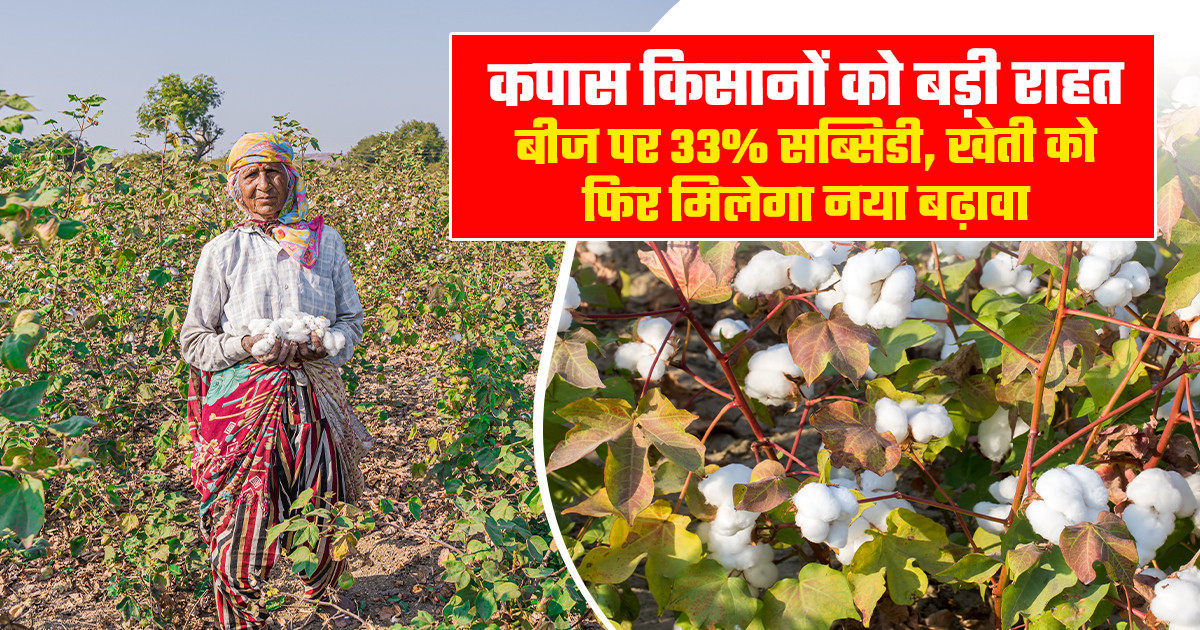
Cotton farmers in Punjab have received a major boost as the state government has announced up to 33% subsidy on seeds to revive cotton cultivation. The initiative aims to reduce input costs and encourage farmers to return to cotton farming. Both desi and BT cotton growers will benefit from this financial support, which is expected to improve productivity and profitability.
Cotton acreage in Punjab has declined significantly over the past few years. In response, the government has introduced this subsidy scheme to restore farmer confidence and bring more area under cotton cultivation. Officials believe that lower input costs and better support will motivate farmers to shift back to this crop.
The scheme is specifically targeted at cotton growers in Punjab. Farmers owning up to 5 acres of land will be eligible for the subsidy. The focus is on supporting small and marginal farmers, enabling them to adopt cotton cultivation with lower financial risk.
Why Cotton Area Declined:
Punjab once had a strong base in cotton farming, with over 700,000 hectares under cultivation in the 1980s. However, multiple challenges led to a steady decline. The most significant factor has been the outbreak of pink bollworm infestations, which caused severe crop damage. As a result, many farmers shifted to alternative crops. By 2024, the cotton area had dropped to nearly 100,000 hectares. The government now aims to reverse this trend through subsidies and improved seed availability.
Expert Recommendations for Better Yield:
Experts from Punjab Agricultural University emphasize that access to quality seeds and timely support is key to making cotton farming viable again.
They recommend farmers to:
How to Apply for the Subsidy:
Farmers can avail of the subsidy by applying within the specified timeline:
It is important to note that the subsidy will only be applicable to seeds approved by Punjab Agricultural University. Farmers are advised to purchase certified seeds to qualify for the benefit.
A Step towards Higher Farm Income:
This initiative is expected to lower cultivation costs and make cotton farming attractive once again. With better inputs and policy support, farmers can improve yields and income levels. Overall, the move is seen as a significant step towards strengthening Punjab’s cotton sector and enhancing farmer livelihoods.