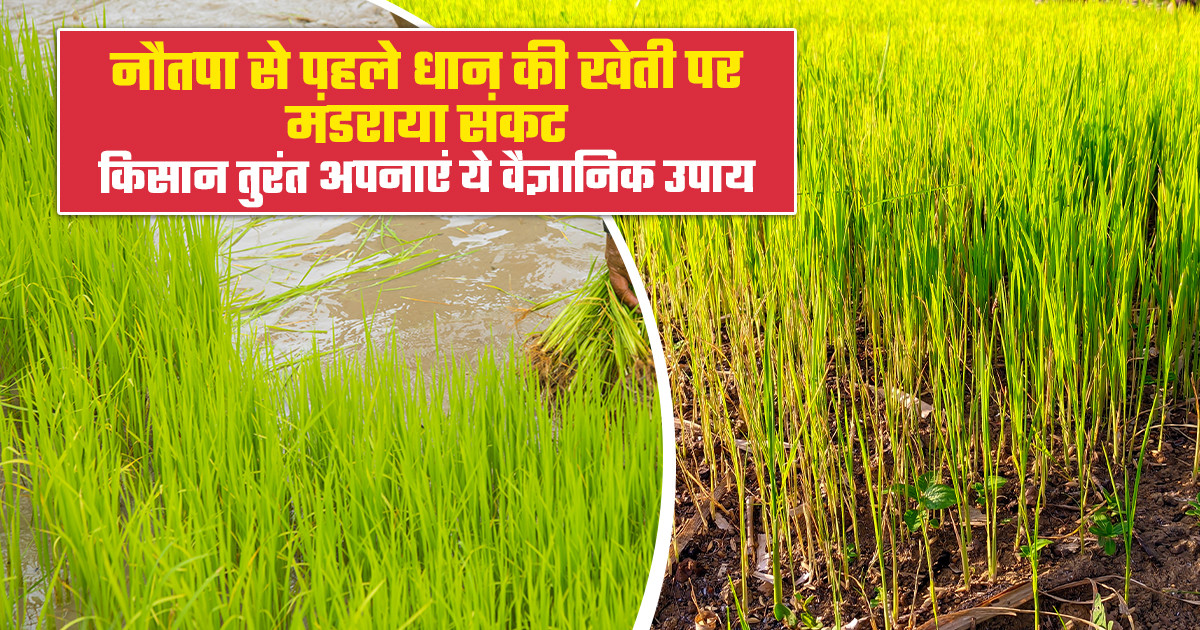
An intense heatwave sweeping across Bihar during the second half of May has emerged as a major challenge for farmers preparing for the upcoming kharif season. Temperatures in several districts have surged between 40°C and 46°C, increasing worries among paddy growers, especially those preparing rice nurseries. Agricultural experts have warned that if precautionary measures are not taken immediately, the extreme heat could severely affect seed germination and early plant growth.
Districts such as Kaimur, Rohtas, Bhojpur, Buxar, Aurangabad, and Chhapra are witnessing continuous temperatures above 40°C. These regions are considered among Bihar’s key rice-producing belts. Due to scorching heat and heatwave-like conditions, farmers are now limiting fieldwork to early morning and evening hours. Weather experts have also indicated that temperatures may rise further in the coming days, increasing pressure on agricultural activities.
According to agricultural scientists, the ideal temperature for paddy nursery preparation ranges between 30°C and 35°C. However, current temperatures are running 7–8 degrees higher than normal. Such excessive heat can negatively impact seed sprouting and slow down the growth of young seedlings. Experts believe that careful nursery management has become essential under the present weather conditions.
Agricultural specialists have suggested several important measures to protect paddy nurseries from heat damage: Farmers are advised to establish nurseries near orchards or tree-covered areas where direct sunlight exposure remains limited. Partial shade can help reduce heat stress on young plants.
Since soil temperatures remain extremely high during the daytime, experts recommend sowing paddy nurseries in the evening for better germination and seedling survival. Irrigation should preferably be done during early morning or evening hours. Watering fields during the afternoon can expose seedlings to hot soil and warm water, causing further damage. Maintaining consistent moisture in nursery beds is also considered crucial.
Proper Field Preparation Becomes Essential in Extreme Heat:
Scientists have also recommended proper nutrient management before preparing paddy nurseries under high-temperature conditions. For approximately 3 dismil of land, farmers are advised to use the following inputs:
|
Material |
Recommended Quantity |
|
Red Potash (60%) |
1–2 kg |
|
Well-decomposed Farmyard Manure |
5 baskets |
|
Carbofuran 3G |
300 grams |
|
Mustard Cake Powder |
3 kg |
|
Dhruvi Gold |
1.5 kg |
|
Potash |
2 kg |
|
DAP Fertilizer |
1.5 kg |
|
Urea |
1 kg |
|
Sulphur |
250 grams |
Experts recommend thoroughly mixing these materials into the soil during field preparation, followed by adequate irrigation to ensure nutrients dissolve properly into the soil.
Best Time for Paddy Nursery Sowing:
Agricultural scientists suggest that long-duration paddy varieties should be sown between May 25 and May 31. For medium and short-duration varieties, nursery preparation around June 20 during the Adra Nakshatra period is considered more suitable.
Nautapa May Intensify the Challenge:
Experts have warned that the onset of Nautapa from May 25 could push temperatures even higher. During this period, farmers will need to pay extra attention to maintaining soil moisture, timely irrigation, and protecting nurseries from direct sunlight.
Scientific Farming Practices Can Reduce Losses: Agricultural experts believe that despite extreme weather conditions, farmers can protect their paddy crop by following scientific advice and proper management practices. Timely sowing, balanced nutrition, and regular irrigation can help reduce heat-related damage and improve the chances of achieving a healthy kharif harvest this season.
FAQs:
1. What is the ideal temperature for paddy nursery preparation?
The ideal temperature for paddy nursery preparation is between 30°C and 35°C.
2. Which Bihar districts are most affected by the heatwave?
Kaimur, Rohtas, Bhojpur, Buxar, Aurangabad, and Chhapra are among the worst-affected districts.
3. When should farmers irrigate paddy nurseries during extreme heat?
Farmers should irrigate nurseries during early morning or evening hours.
4. Why is evening sowing recommended for paddy nursery?
Evening sowing helps protect seeds from excessive daytime soil heat and improves germination.
5. How can farmers protect paddy seedlings from heat stress?
Farmers can use shaded areas, maintain soil moisture, provide timely irrigation, and follow balanced nutrient management practices.
FAQs:
1. What is the ideal temperature for paddy nursery preparation?
The ideal temperature for paddy nursery preparation is between 30°C and 35°C.
2. Which Bihar districts are most affected by the heatwave?
Kaimur, Rohtas, Bhojpur, Buxar, Aurangabad, and Chhapra are among the worst-affected districts.
3. When should farmers irrigate paddy nurseries during extreme heat?
Farmers should irrigate nursery beds during early morning or evening hours.
4. Why is evening sowing recommended for paddy nursery?
Evening sowing protects seeds from excessive daytime soil heat and improves germination.
5. How can farmers protect paddy seedlings from heat stress?
Farmers can use shaded areas, maintain proper soil moisture, provide timely irrigation, and follow balanced nutrient management practices.