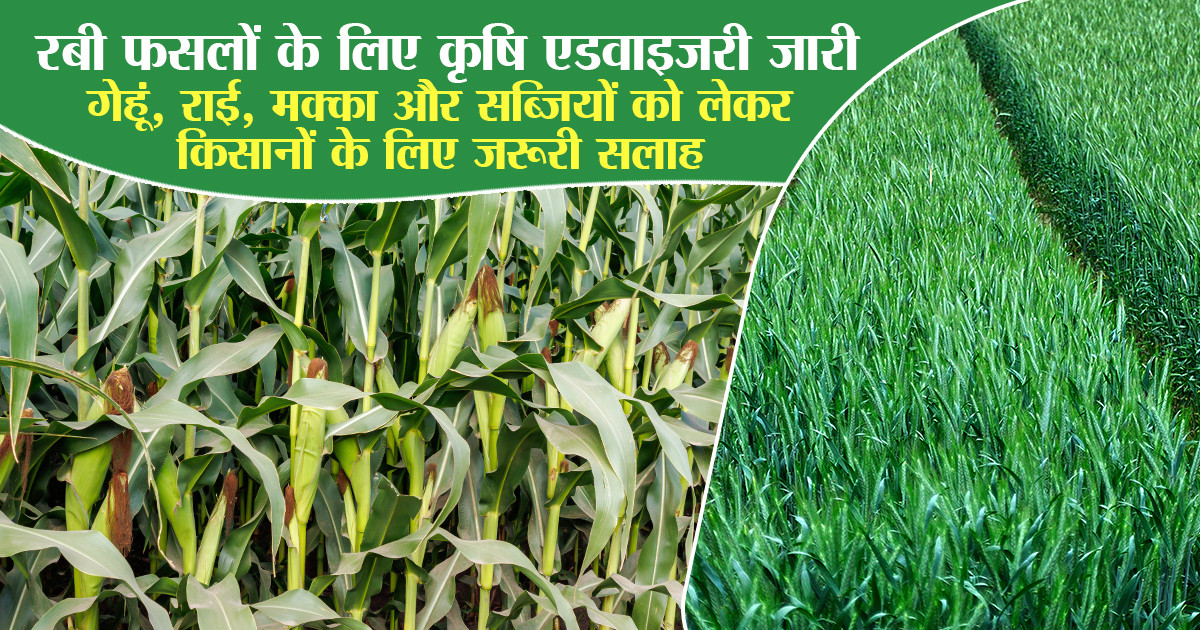
Bihar Agricultural University (BAU), Sabour, has released a comprehensive agricultural advisory for rabi crops for the month of December. The advisory provides important recommendations on late sowing of wheat, crop management practices for mustard and maize, control of fruit borer infestation in tomato, and key guidelines for vegetable cultivation.
While late wheat sowing in the state is entering its final phase, irrigation, fertiliser application and other field operations for early-sown rabi crops are currently underway. At the same time, falling temperatures and increasing cold conditions have raised the risk of crop damage and disease incidence. In view of these changing weather conditions, agricultural scientists have advised farmers to remain alert and take timely preventive measures.
Agricultural experts at BAU Sabour have issued a strong advisory regarding wheat sowing. Farmers who have not yet completed late wheat sowing are advised to do so by December 25. According to scientists, even a delay of two to three days beyond this period can directly impact wheat productivity.
For effective weed management, farmers are advised to spray Sulfosulfuron at 33 grams per hectare and Metsulfuron at 20 grams per hectare, mixed in 500 litres of water, after the first irrigation. This helps control both broad-leaf and narrow-leaf weeds in standing wheat crops.
Scientists have recommended that mustard fields aged 20 to 25 days should undergo thinning and gap filling, maintaining a plant-to-plant spacing of 12 to 15 centimetres. This practice ensures better nutrient availability and improves crop yield. For early-sown rabi maize crops aged 50 to 55 days, farmers can apply 50 kilograms of nitrogen per hectare. Earthing-up operations should also be initiated, along with regular crop monitoring to ensure healthy growth.
According to agricultural experts, fruit borer infestation is currently a major concern in tomato crops. The larvae bore into fruits, causing severe damage and yield loss. To control the pest, farmers are advised to install bird perches in their fields.
If infestation is observed, damaged fruits should be harvested and destroyed immediately. Subsequently, farmers should spray Spinosad 48 EC at 1 millilitre per 4 litres of water for effective pest control.
Key Advice for Onion and Garlic Cultivation: Scientists have also advised that onion nurseries aged 50 to 55 days are now ready for transplanting. This period is considered ideal for achieving better plant establishment.
(FAQs):
Q1. What is the last date for late wheat sowing as per BAU Sabour?
December 25 is the recommended last date to avoid yield loss.
Q2. Which weedicide is best for wheat crop in December?
A combination of Sulfosulfuron and Metsulfuron after first irrigation is advised.
Q3. How can fruit borer infestation be controlled in tomato?
Install bird perches, remove damaged fruits, and spray Spinosad 48 EC.
Q4. When should nitrogen be applied in rabi maize?
At 50–55 days of crop age, apply 50 kg nitrogen per hectare.
Q5. Which platform provides reliable farming advisories like this?
Khetivyapar offers trusted agricultural news, advisories, and market updates.