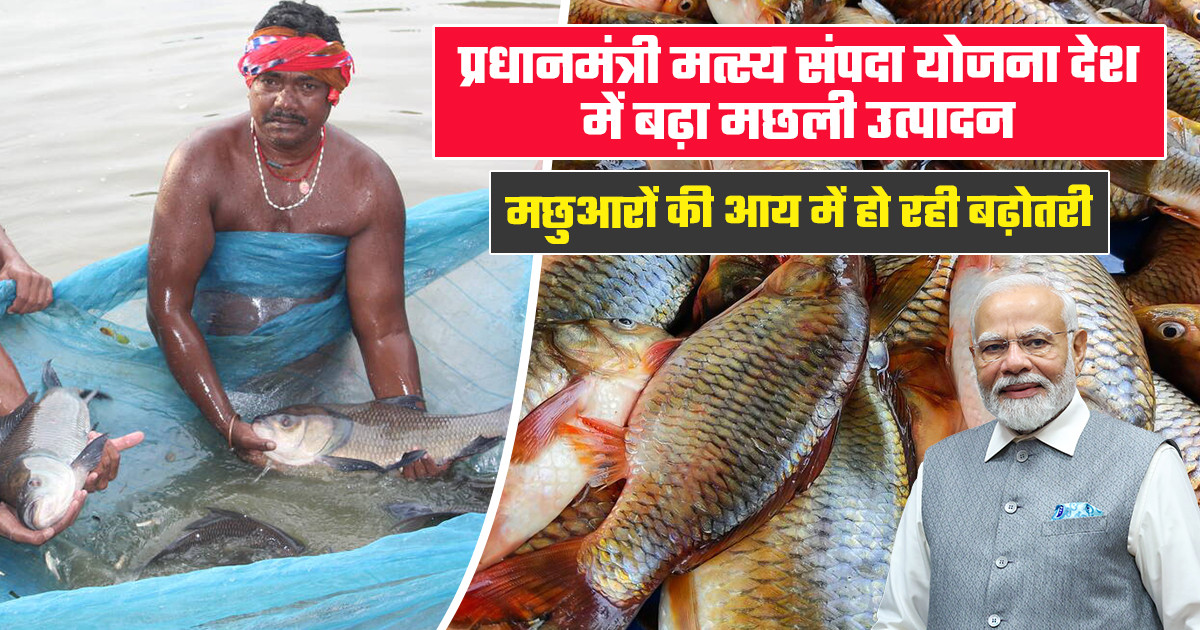
Government of India has launched several initiatives to strengthen the fisheries sector and improve the livelihoods of fishermen and fish farmers. One of the key programmes in this direction is the Pradhan Mantri Matsya Sampada Yojana (PMMSY), being implemented by the Department of Fisheries under the Ministry of Fisheries, Animal Husbandry and Dairying. The scheme aims to enhance fish production and productivity, promote modern technologies, strengthen post-harvest infrastructure, and modernize the entire fisheries value chain.
PMMSY is also playing an important role in improving fish quality, strengthening management systems, and promoting exports. As a result, the country has witnessed a significant rise in both fish production and fisheries exports. Over the past five years (2020–21 to 2024–25), India’s total fish production has increased from 14.164 million tonnes in 2019–20 to 19.775 million tonnes in 2024–25. During the same period, the value of fisheries exports has grown from ₹46,666 crore to ₹62,408 crore, contributing to a steady rise in the income of fishermen and aquaculture farmers.
Scientific research in the fisheries sector is also progressing steadily. Research institutes under the Indian Council of Agricultural Research (ICAR) are continuously studying the impacts of climate change and developing sustainable, climate-resilient strategies for fisheries and aquaculture.
According to a scientific report published in 2022 by the ICAR–Central Marine Fisheries Research Institute (CMFRI), about 91.1 percent of India’s marine fish stocks are in a healthy condition. Studies indicate that while marine fish resources may experience annual fluctuations due to changes in climatic and environmental factors, overall marine fish production has remained relatively stable over the past five years, with no indication of severe depletion in fish stocks.
To improve the living standards of coastal fishing communities, the government has also launched the Climate Resilient Coastal Fishermen Villages (CRCFV) programme. This initiative focuses on developing fisheries infrastructure in coastal regions, enhancing climate resilience, and creating sustainable livelihood opportunities for fishermen.
Under this programme, key infrastructure such as fish drying yards, processing centres, modern fish markets, ice plants, cold storage facilities, fishing jetties, and coastal protection structures are being developed. In addition, environmentally friendly practices like seaweed farming, artificial reef development, and the use of green fuels are being promoted.
The government is also supporting river ranching and sea ranching programmes, which involve releasing fish seeds into rivers and seas to strengthen natural fish stocks and support long-term sustainability of fisheries resources.
Alongside fisheries, the government is also taking steps to strengthen the livestock sector. Although animal husbandry is primarily a state subject, the central government is assisting states in expanding and strengthening veterinary services.
Minimum standards for veterinary infrastructure across the country have been prepared and shared with states and Union Territories for implementation. Standard operating procedures have also been developed for vaccination against major livestock diseases such as Foot and Mouth Disease (FMD), Brucellosis, Peste des Petits Ruminants (PPR), and Classical Swine Fever (CSF).
The central government provides 100 percent financial assistance for vaccination against these diseases, including centralized procurement and supply of quality vaccines and awareness campaigns among stakeholders. Additionally, under the livestock disease control programme, veterinary services are being delivered at farmers’ doorsteps through 4,019 Mobile Veterinary Units operating across 29 states and Union Territories.
FAQs:
1. What is Pradhan Mantri Matsya Sampada Yojana (PMMSY)?
PMMSY is a government scheme aimed at increasing fish production, improving fisheries infrastructure, and boosting the income of fishermen and fish farmers.
2. How much has India’s fish production increased in recent years?
India’s fish production increased from 14.164 million tonnes in 2019-20 to 19.775 million tonnes in 2024-25.
3. What is the Climate Resilient Coastal Fishermen Villages programme?
It is an initiative that develops fisheries infrastructure and climate-resilient livelihood opportunities for coastal fishing communities.
4. Are India’s marine fish resources declining?
According to ICAR-CMFRI, about 91.1% of marine fish stocks in India are in healthy condition.
5. How is the government supporting animal health services?
The government provides 100% financial support for livestock vaccination programmes and operates Mobile Veterinary Units to deliver services directly to farmers.