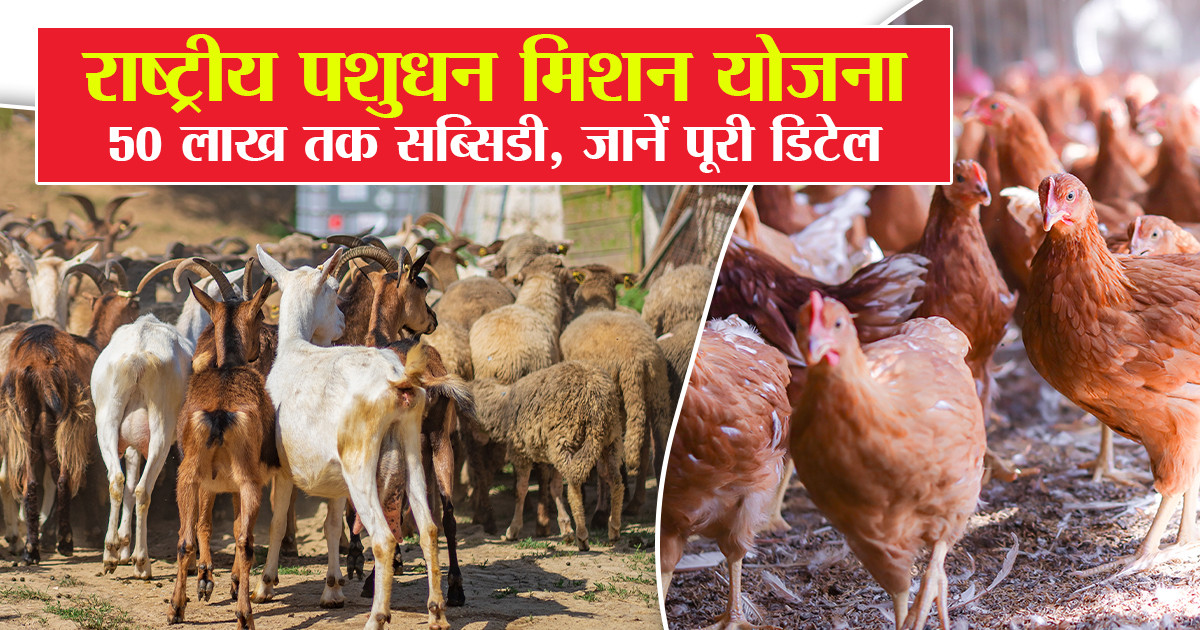
The Entrepreneurship Development Programme (NLM-EDP), implemented under the National Livestock Mission (NLM), is a flagship credit-linked scheme of the Government of India’s Department of Animal Husbandry and Dairying. Under this scheme, eligible beneficiaries are provided capital subsidy of up to 50 percent of the project cost, subject to a maximum limit of ₹50 lakh.
The subsidy is available to individual entrepreneurs, Farmer Producer Organisations (FPOs), Self-Help Groups (SHGs), Joint Liability Groups (JLGs), Farmer Cooperative Organisations (FCOs), and Section 8 companies.
The NLM-EDP scheme, the establishment and expansion of a wide range of livestock and allied projects in rural areas are being actively promoted. These include:
Depending on the nature of the project, the maximum subsidy ranges from ₹3 lakh to ₹50 lakh.
Over the past five years, a total allocation of ₹559.53 crore has been made under the NLM-EDP scheme. The category-wise progress of approved and released subsidies is as follows:
Overall, ₹1,233.69 crore in subsidies has been approved for 3,843 projects, out of which ₹473.40 crore has already been disbursed.
The NLM-EDP scheme is expected to generate direct and indirect employment opportunities for nearly 18,475 people. At present, no projects have been approved under the scheme in Baran district of Rajasthan, while two projects in Jhalawar district have been sanctioned, which are expected to create employment for 13 individuals.
Beyond direct employment for entrepreneurs and workers, the scheme also supports indirect job creation through veterinary services, animal feed supply chains, transportation, marketing, and market linkages.
Strengthening Rural Livelihoods and Skill Development:
NLM-EDP plays a crucial role in strengthening rural livelihoods, with a special focus on empowering rural youth and women, particularly those from marginalised and landless households. The scheme provides viable livelihood opportunities and promotes self-reliance in rural areas.
Addition, the programme places strong emphasis on capacity building, skill-based training, and the transfer of modern technologies. Training modules cover key areas such as breeding, feeding, animal health management, processing, and modern management practices, enabling livestock farmers to adopt scientific, efficient, and profitable livestock rearing practices.