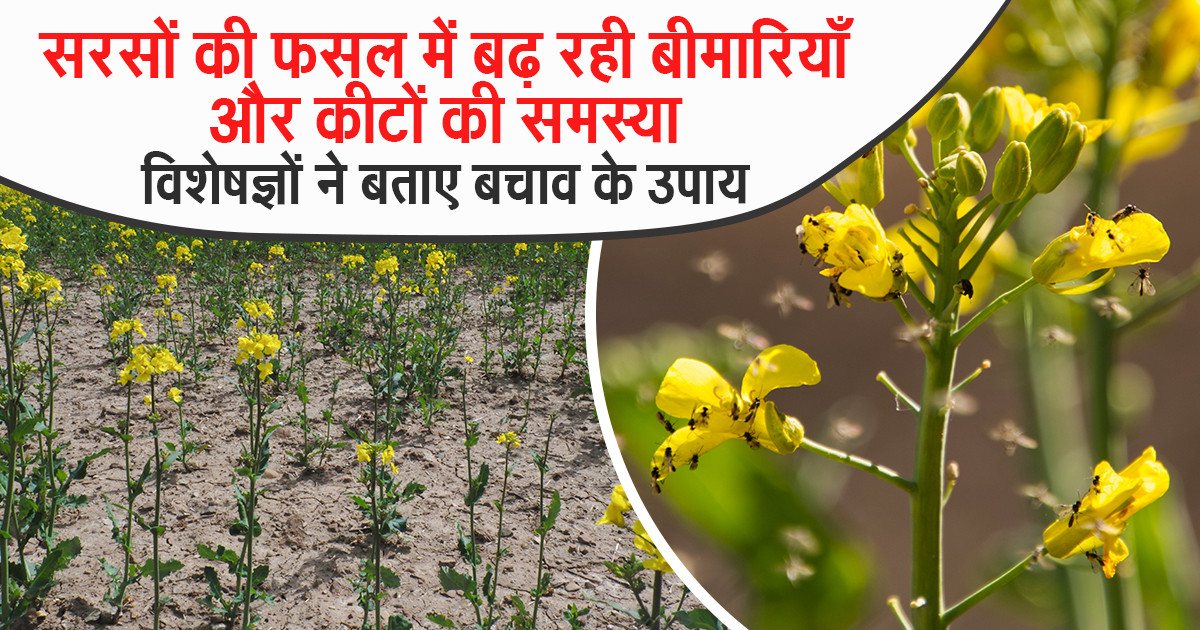
Mustard cultivated extensively across many Indian states and is considered a major rabi oilseed crop that ensures good income for farmers. However, due to adverse weather conditions and delayed sowing this season, the crop is now facing a higher risk of disease and pest infestation. In view of this, Chaudhary Charan Singh Haryana Agricultural University, Hisar, has released a detailed advisory for farmers.
According to experts, the likelihood of Root Rot disease has risen in the current weather conditions. Symptoms include wilting, drying of plants and the presence of white fungal growth on the roots. The disease is caused by fungi such as Fusarium, Rhizoctonia and Sclerotium.
For control, farmers are advised to spray 0.1% carbendazim solution. In severe cases, a second spray may be done after 15 days.
White fungal patches on the underside of leaves indicate the onset of Downy Mildew. Affected leaves turn yellow and start drying. Farmers can control it by spraying mancozeb or a metalaxyl + mancozeb mixture at the rate of 2.5 grams per litre of water. If the crop shows symptoms of both root rot and leaf spot, a tank mix of 0.1% carbendazim and 0.25% mancozeb is recommended.
In the early growth stage, mustard may show the presence of Painted Bug (Chitkabra), which causes white patches on leaves. However, due to lower temperatures this year, the pest is far less active. Experts have advised farmers not to spray insecticides unnecessarily, as it only increases cost and harms beneficial insects.
Waterlogging can lead to wilting and poor plant vigor. In fields with high moisture, the first irrigation should be delayed by 10 days. If yellowing or wilting is observed after the first irrigation, farmers should spray a mixture of carbendazim (1 g/litre) and streptocycline (0.3 g/litre). This helps in quick plant recovery and prevents further spread of infection.
Re-sowing in Fields with Heavy Damage:
For fields where significant crop loss has occurred, the university advises re-sowing till 10 November. Seeds must be treated with carbendazim at 2 grams per kg of seed to ensure protection from early-stage diseases and better germination.
Mustard Crop Needs Extra Care This Season:
Due to unusual weather patterns and excess humidity, mustard crops are more vulnerable this year. Experts recommend regular field monitoring and avoiding unnecessary chemical applications. If farmers follow the university’s advisory on time, the crop can be effectively protected from diseases and pests, ensuring healthy and profitable yields.
Read More- How to do Mustard Cultivation and know its Disease and Management, Know on Khetivyapar