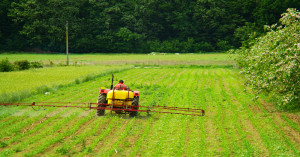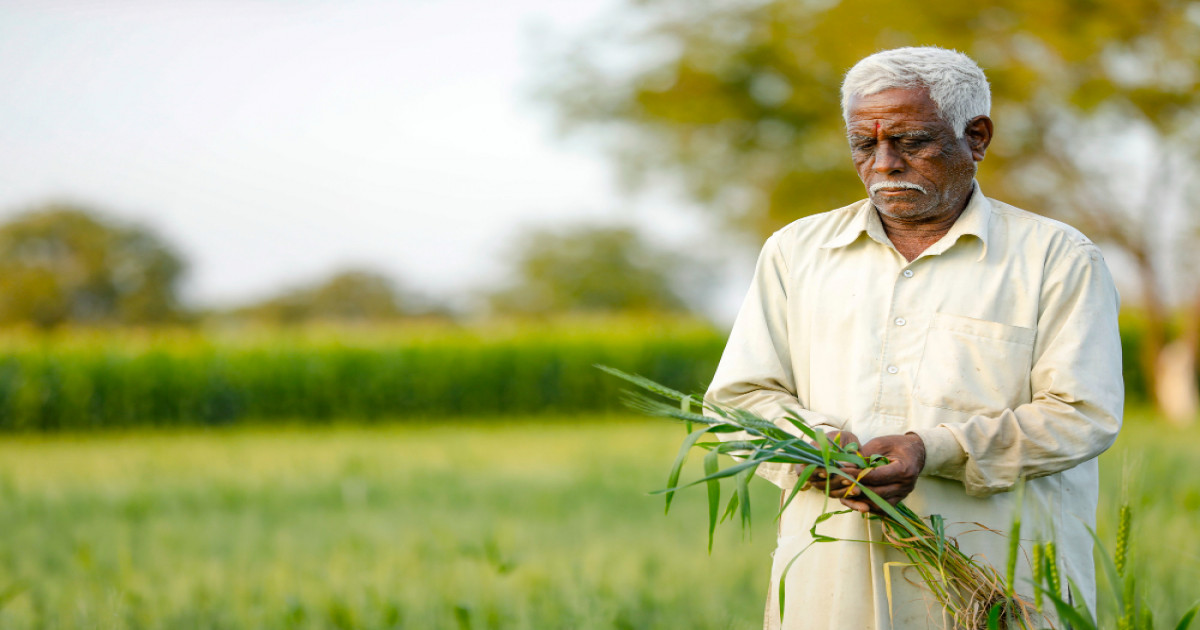
Madhya Pradesh Governor Mangubhai Patel has announced that the state government will observe 2026 as “Agriculture Year.” He stated that agriculture is the backbone of the state’s economy and that the government is continuously taking concrete steps to ensure the welfare of farmers. The Governor made these remarks while addressing a programme held in the state capital, Bhopal, on the occasion of the 77th Republic Day.
The Governor informed that the budget allocation for agriculture and allied sectors has seen consistent growth over the years. While the agriculture budget stood at just ₹600 crore in 2002–03, it has been increased to over ₹27,000 crore in 2024–25. He added that preparations to celebrate 2026 as Agriculture Year are already underway.
Mangubhai Patel said that a multi-dimensional agricultural development model has been adopted to achieve the vision of “Prosperous Farmers, Prosperous State.” The model includes 10 key focus areas, such as technology transfer, enhancement of farmers’ income, promotion of natural farming, improved marketing and exports, innovation, and digital transparency. These initiatives will be implemented in a phased manner across the state.
The Governor stated that the e-Mandi scheme has been implemented in 259 agricultural markets across Madhya Pradesh, with over 40 lakh farmers registered so far. The initiative is helping farmers secure transparent transactions and better prices for their produce.
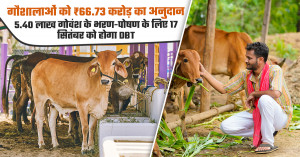
He also emphasized that the state government is making special efforts to position Madhya Pradesh as the “Milk Capital of India” and to transform animal husbandry into a profitable occupation. To support the protection of stray cattle, the per-animal subsidy in gaushalas has been doubled from ₹20 to ₹40, while the budget allocation for this purpose has been increased from ₹250 crore to ₹505 crore.
The Governor said that through the Dr. B.R. Ambedkar Kamdhenu Scheme, the state aims to increase its contribution to national milk production from 9 percent to 20 percent. So far, 1,200 new milk cooperative societies have been established, and the milk procurement price is being increased from ₹2.50 to ₹8.50 per litre. Focus on Housing, Jobs and Basic Infrastructure
Mangubhai Patel reiterated that the government remains committed to providing housing and basic amenities to poor families. Under the Pradhan Mantri Awas Yojana, more than 11 lakh houses were approved last year, out of which nearly four lakh have already been completed. He added that the government has set a target of constructing around 5.25 lakh new houses. Under the Chief Minister Majra-Tola Scheme, over ₹21,000 crore has been sanctioned to connect nearly 20,000 habitations with roads. Additionally, under the Viksit Bharat–Employment and Livelihood Mission (VB-G RAM G), employment under MGNREGA will be extended from 100 days to 125 days.
Major Steps for Wildlife Conservation and Tourism Promotion:
The Governor said that the state government has also taken significant steps in the field of wildlife conservation. The Madhav National Park in Shivpuri has been declared the ninth tiger reserve of the state. Moreover, the Dr. B.R. Ambedkar Sanctuary in Sagar district and the Jahangir Sanctuary in Sheopur district have been established. He further informed that the Nauradehi Sanctuary is being developed as the third habitat for cheetahs in the state. This initiative has not only boosted tourism but has also created new employment opportunities for local communities.
FAQs:
1. What is the significance of declaring 2026 as Agriculture Year in Madhya Pradesh?
It aims to boost agricultural development and farmer welfare through focused government initiatives.
2. How many farmers are benefitting from the e-Mandi system in Madhya Pradesh?
Over 40 lakh farmers are registered and benefiting from transparent trade and better prices.
3. What is the goal of the Dr. B.R. Ambedkar Kamdhenu Scheme?
To increase Madhya Pradesh’s share in national milk production from 9% to 20%.
4. How is the state government supporting poor families in housing?
Through schemes like Pradhan Mantri Awas Yojana and Chief Minister Majra-Tola with thousands of houses approved and under construction.
5. What steps is Madhya Pradesh taking for wildlife conservation?
The state has declared new tiger reserves, created sanctuaries, and is developing habitats for cheetahs to promote conservation and tourism.