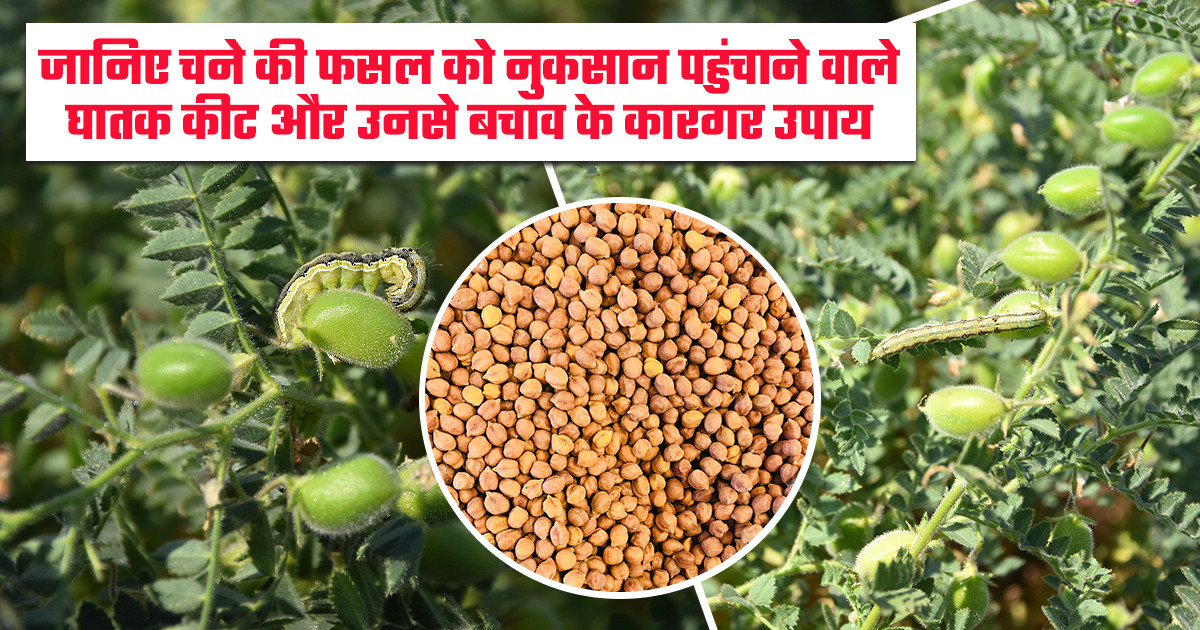
Chickpea is one of the most important pulse crops of the rabi season and a key source of income for millions of farmers across the country. Farmers invest significant effort and resources to achieve good yields, but changing weather conditions and the increasing incidence of pests continue to pose serious threats to chickpea cultivation.
In particular, pests such as pod borer, termite, and cutworm cause severe damage to the chickpea crop. If these pests are not identified and controlled in time, farmers may suffer yield losses ranging from 30 to 60 percent.
Let us understand the major pests affecting chickpea, their symptoms, and effective preventive measures.
The pod borer is considered the most dangerous pest of the chickpea crop. Its adult stage is a moth, while the larval stage (caterpillar) causes maximum damage. During the early growth stage, the larvae feed on tender stems and leaves. As flowering and pod formation begin, the larvae bore into pods and feed on the developing grains.
Severe infestation of pod borer can lead to a 30–40 percent reduction in yield, resulting in heavy economic losses for farmers.
Termites are another major pest that can damage the chickpea crop from sowing to harvest. Their infestation is more common in dry and low-moisture regions. Termite-affected plants gradually turn yellow, wilt, and eventually dry up. These pests damage the crop by hollowing out roots and stems from inside.
Due to termite attack, chickpea yield losses of 30–60 percent have been reported.
Cutworm causes severe damage during the early growth stage of the chickpea crop. It cuts young seedlings at the soil surface, leading to reduced plant population in the field. This pest is active at night and hides under soil clods or weeds during the day.
Cutworm infestation restricts plant growth and results in poor pod development.
Control Measures for Cutworm:
Timely Pest Control Ensures Better Chickpea Yield: Pod borer, termite, and cutworm are extremely harmful pests for the chickpea crop. With timely identification, regular field monitoring, and proper control measures, farmers can significantly reduce crop losses and achieve better and more profitable chickpea production.
(FAQs)
Q1. Which pest causes maximum damage to chickpea?
Pod borer is the most destructive pest, causing up to 40% yield loss.
Q2. How can termite attack be prevented in chickpea?
Use well-decomposed FYM, biological fungi, and proper soil moisture management.
Q3. When does cutworm damage occur the most?
Cutworm causes maximum damage during the early seedling stage.
Q4. Are neem-based pesticides effective for chickpea pests?
Yes, neem-based pesticides are effective and eco-friendly for pest control.
Q5. Why is timely pest management important in chickpea?
Timely control prevents heavy yield losses and increases crop profitability.