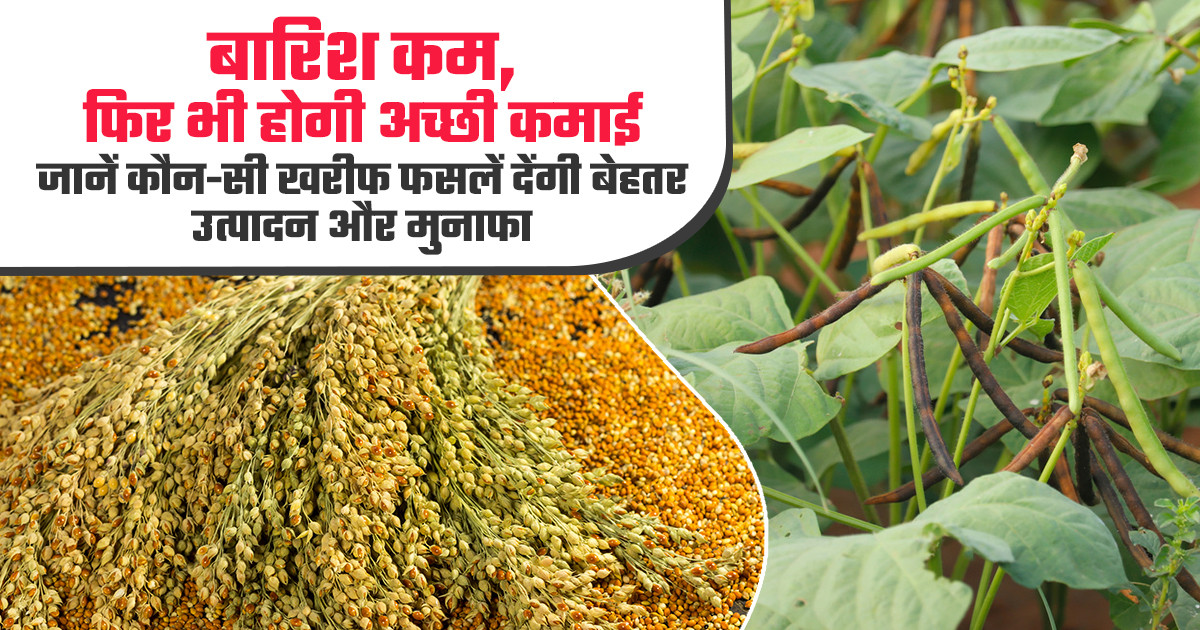
Kharif season plays a crucial role in India's agricultural economy, but below-normal rainfall or prolonged dry spells during the monsoon can create significant challenges for farmers. In such situations, choosing the right crop becomes essential to reduce risks and maintain farm profitability. Agricultural experts recommend cultivating drought-tolerant crops that can perform well with limited moisture and deliver stable yields even under challenging weather conditions.
Bajra (pearl millet) is widely regarded as one of the most reliable Kharif crops for areas receiving limited rainfall. The crop requires relatively less water and can withstand drought conditions better than many traditional cereals. Its growing popularity as a nutritious food grain has also strengthened market demand, making it an attractive option for farmers seeking both resilience and profitability.
Jowar (sorghum) is another drought-resistant crop that performs well in areas with poor rainfall and marginal soils. Besides providing grain for human consumption, it serves as a valuable source of fodder for livestock. Its adaptability to harsh conditions makes it a practical choice for farmers facing uncertain monsoon patterns.
Moong (green gram) is a low-water-requirement pulse crop that matures quickly and offers good market value. It is particularly suitable for regions with limited irrigation facilities. In addition to generating income, moong improves soil fertility through natural nitrogen fixation, benefiting subsequent crops as well.
Urad: Profitable Even with Limited Moisture:
Urad (black gram) is another pulse crop that can thrive under low-moisture conditions. The crop enjoys consistent market demand and can provide attractive returns to farmers. It also contributes to soil health by increasing nitrogen availability, helping improve overall land productivity.
Sesame: A Drought-Tolerant Oilseed Crop:
Sesame is well suited for dry farming conditions and requires relatively little water compared to many other oilseed crops. Strong demand from the edible oil industry and favorable market prices make sesame a profitable option for farmers in low-rainfall regions.
Pigeon Pea: Deep Roots, Greater Resilience:
Pigeon pea (arhar) is known for its deep root system, which enables it to access moisture from deeper soil layers. This characteristic allows the crop to withstand dry spells more effectively than many other crops. With steady demand in domestic markets, pigeon pea can provide a dependable source of income even in challenging weather conditions.
Essential Tips for Successful Farming during Low Rainfall:
Experts emphasize that selecting the right crop is only part of the solution. Effective field management practices can significantly improve crop performance under moisture-stressed conditions.
Key Recommendations for Farmers:
Smart Crop Selection Can Reduce Weather Risks:
Agricultural specialists believe that adapting crop choices to changing weather patterns is becoming increasingly important. In areas facing below-normal rainfall, crops such as bajra, jowar, moong, urad, sesame, and pigeon pea offer a practical balance between risk management and profitability. By combining drought-resilient crops with improved water conservation practices, farmers can protect yields, reduce losses, and maintain stable incomes even during weaker monsoon seasons.
FAQs:
1. Which is the best crop for low rainfall during the Kharif season?
Bajra is considered one of the best crops for low rainfall areas because it requires less water and can tolerate drought conditions effectively.
2. Is moong suitable for drought-prone regions?
Yes, moong is a low-water-requirement pulse crop that matures quickly and performs well in drought-prone regions.
3. Why is pigeon pea recommended for dry areas?
Pigeon pea has a deep root system that helps it access moisture from deeper soil layers, making it more resilient during dry spells.
4. Can sesame be grown with limited rainfall?
Yes, sesame is a drought-tolerant oilseed crop that requires relatively little water and is suitable for dry farming conditions.
5. How can farmers improve yields during low rainfall?
Farmers can improve yields by using mulching, drought-tolerant seeds, organic manure, rainwater harvesting, and micro-irrigation techniques.