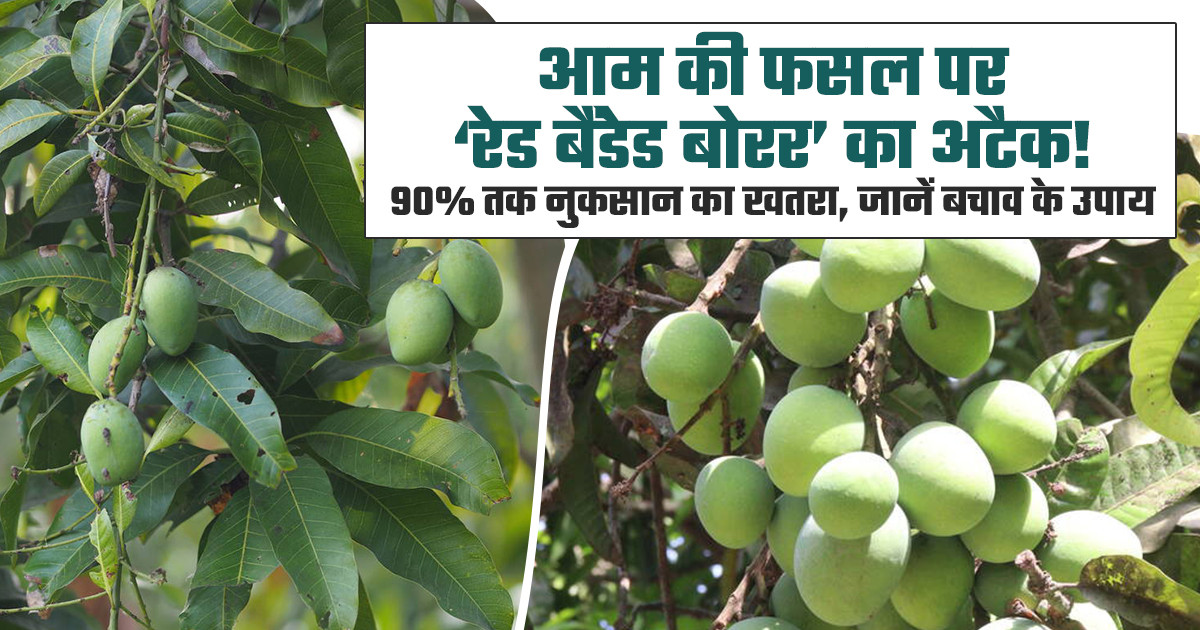
Mango cultivation holds a vital place in India’s horticulture sector, but a growing threat from the Red Banded Borer is becoming a serious concern for farmers. This destructive pest bores into developing fruits, feeding on the pulp and seed from within. As a result, affected fruits drop prematurely, leading to significant yield and income losses.
While India leads in mango cultivation area, changing weather patterns and rising humidity have encouraged the spread of new pests. In recent years, the Red Banded Caterpillar has severely impacted orchards in states like Bihar, Uttar Pradesh, and West Bengal. In some regions, crop losses have been reported as high as 80–90%. Experts note that the pest is most active when fruits are at the pea or marble stage, making early detection and timely control absolutely critical.
Signs of infestation include premature fruit drop, tiny boreholes on fruits, and a foul smell due to internal rotting. The pest can complete 3–4 life cycles within a single season, accelerating the damage.
Preventive Measures Farmers Should Follow:
Biological control methods such as neem-based formulations (like azadirachtin) and beneficial insects are also effective. These eco-friendly approaches help maintain fruit quality while protecting the environment.
Chemical Control: When and How to Apply:
Integrated Pest Management is the Key:
Adopting Integrated Pest Management (IPM) is the most sustainable way to tackle the Red Banded Borer. A balanced approach combining sanitation, biological control, and need-based chemical use can effectively reduce pest damage. Weather conditions like high humidity and cloudy environments favor the pest’s growth, so regular monitoring of orchards is essential.
FAQs:
Q1. What is Red Banded Borer in mango?
It is a destructive pest that damages mango fruits by feeding inside them.
Q2. When does Red Banded Borer attack occur?
It mainly attacks during the pea to marble stage of fruit growth.
Q3. How can farmers identify infestation?
Signs include holes in fruits, bad smell, and early fruit drop.
Q4. What is the best control method?
Maintaining orchard hygiene and using IPM is most effective.
Q5. Which pesticide is recommended?
Chlorantraniliprole and Emamectin Benzoate are commonly used.