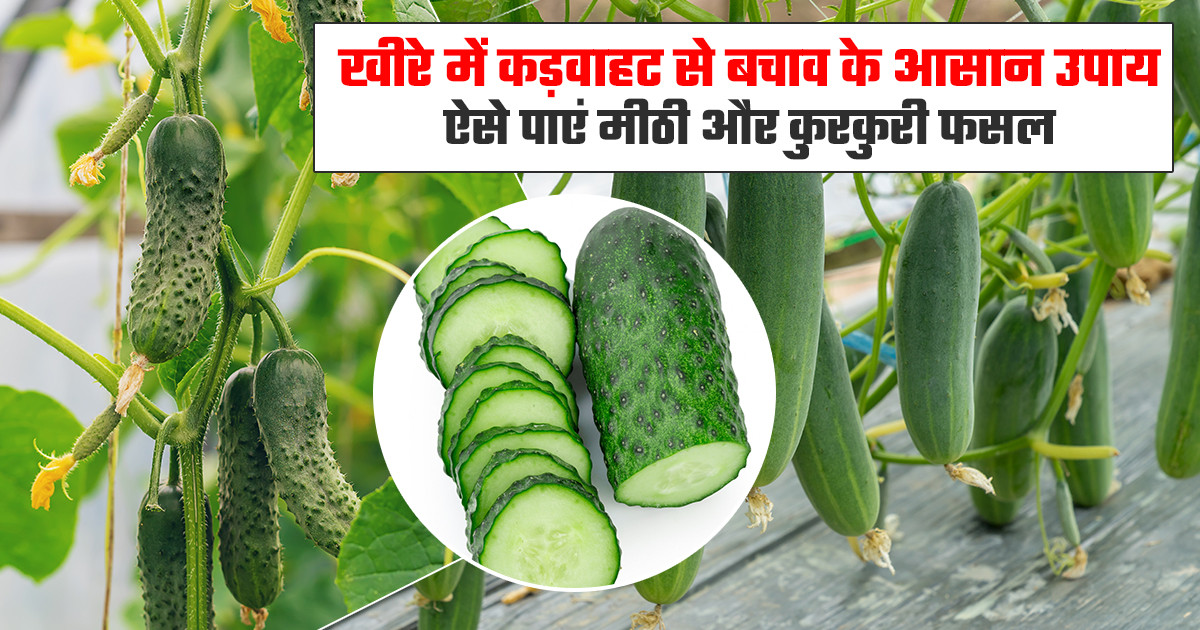
Maintaining taste and quality in cucumber cultivation is a top priority for farmers. However, bitterness can sometimes reduce the market value of the produce. Experts suggest that with proper crop management practices, this issue can be effectively controlled, ensuring a high yield of sweet and crunchy cucumbers.
The primary reason behind bitterness in cucumbers is a natural compound called cucurbitacin. This substance is mainly found in the peel and stem-end of the fruit. When the plant undergoes stress due to drought, excessive heat, nutrient deficiency, or other unfavorable conditions, the level of cucurbitacin increases, leading to a bitter taste.
Selecting the right variety at the beginning is crucial. Farmers should opt for improved hybrid or bitter-free varieties that are specifically developed to contain lower levels of cucurbitacin. Using certified and high-quality seeds not only enhance taste but also improve overall productivity.
Maintain Proper Irrigation and Moisture:
Cucumbers contain nearly 90% water, making proper irrigation essential. Irregular watering can stress the plants and increase bitterness.
Drip irrigation or light, frequent watering is ideal:
Protect from Heat and Harsh Sunlight:
Ensure Balanced Nutrition:
Harvest at the Right Time:
What to Do If Cucumbers Turn Bitter?
FAQs:
1. What is the main cause of bitterness in cucumber cultivation?
Cucurbitacin compound increases due to plant stress like heat, drought, or poor nutrition.
2. How can irrigation reduce bitterness in cucumber cultivation?
Regular and light watering prevents stress, reducing bitterness.
3. Which varieties are best for cucumber cultivation?
Hybrid and bitter-free varieties are ideal for better taste and yield.
4. Does fertilizer affect cucumber taste?
Yes, balanced nutrients improve quality, while excess nitrogen can increase bitterness.
5. When is the best time to harvest cucumbers?
Early morning and before over-ripening ensures sweet and crunchy cucumbers.